
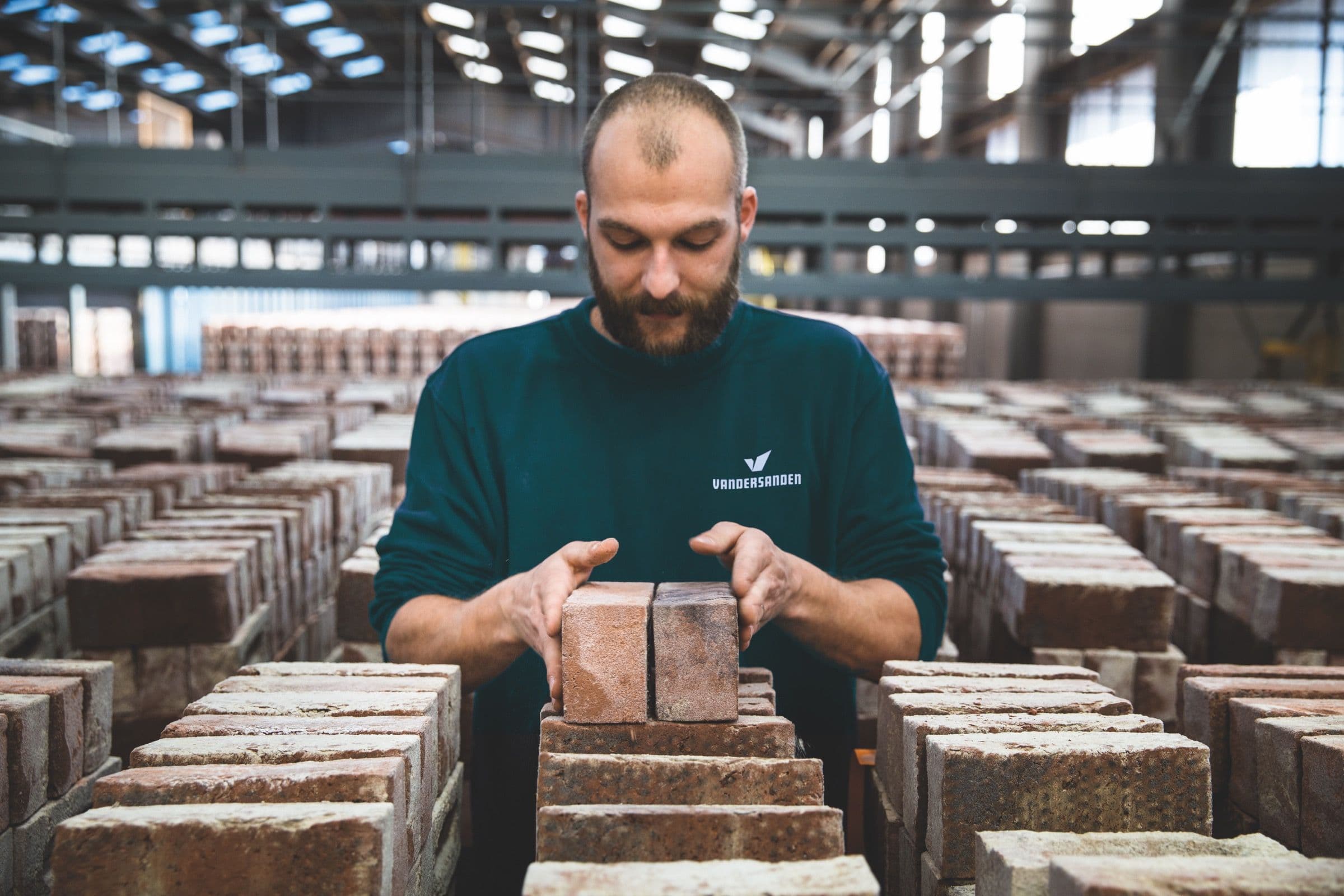
Vandersanden and Soterics have been working together for several years on a secure remote access project, rolled out across multiple production sites in five countries. What makes the collaboration work is not the technology itself, but the way Soterics operates: technically grounded, direct, and willing to adapt to how Vandersanden actually works.
Context
A manufacturer that grew faster than its infrastructure
Vandersanden is a brick manufacturer active across five countries, with more than 850 employees and around 15 locations, 10 of which are production sites. The company has grown significantly over the past decade, roughly doubling in size through an acquisition that brought new sites, new systems, and a great deal of inherited complexity.
Leading the IT infrastructure and security architecture across this environment is Steven Vanhoenshoven, enterprise architect for security and networking. His role spans everything from strategic vision to hands-on support for the service desk, and the IT team has grown with him: from four people when he started, to 19 today. The mix of IT and OT environments, multiple countries, different cultures, and a wide range of employee profiles creates a level of complexity that is genuinely difficult to manage with a small team.
The challenge
Visibility gaps, inherited risk, and a remote access blind spot
The remote access solution Vandersanden had in place offered limited control over who was connecting, when, and from which device. With operations spread across multiple countries and production sites, and with a mix of inherited systems following past acquisitions, the lack of structured oversight was becoming harder to justify. The organisation needed a dedicated, auditable solution that could scale across all its sites and give the team actual visibility over who was in the network.
Vandersanden does not currently fall within the industries covered by NIS2, so there is no formal compliance obligation. Even so, the organisation uses it as a guiding framework, on the assumption that the scope could expand in the future and that following its principles now is simply good practice. Remote access is one of the areas NIS2 addresses explicitly, which only reinforced the case for getting this right.
The relationship
A partner encountered before the problem became urgent
When Vandersanden started looking for a partner to address their remote access challenge, they already knew Soterics. That existing relationship made it easier to move quickly.
Our trust in Soterics was already there. They don't just push something in. They listen to what you need and try to find something that actually fits.
Soterics proposed Wallix as the solution, handled the implementation, and rolled it out across four production sites in 2024, with four more added in 2025.
What the collaboration delivers
Responsiveness, flexibility, and honest advice
Three things stand out for Steven when describing what makes Soterics valuable.
They think along rather than just execute.
Soterics does not arrive with a fixed solution and press to have it implemented. They listen, they adapt, and they are willing to recommend against their own commercial interest when the situation calls for it.
They are accessible.
Questions get answered quickly, and during active project phases communication happens directly between the technical people involved.
They are extremely responsive. That has been a genuine strength.
They have real OT credibility.
Steven has encountered vendors and consultancies that claim OT expertise but struggle when conversations get specific.
We can knock a lot of people out of the conversation in two sentences if they're staying theoretical. Soterics doesn't have that problem.
Conclusion
For Vandersanden, the value of working with Soterics comes down to a simple thing: a partner that knows OT, gives honest advice, and gets things done without overcomplicating the process. In an environment that has grown quickly and carries its share of legacy complexity, that combination is harder to find than it sounds.